

Last Updated: October 28, 2026
Quick Summary
High quality dog shirts are defined mainly by their fabric, starting with ring-spun cotton, which is spun more tightly for a finer, smoother yarn. Fabric weight, dye method and fit then determine comfort, breathability and how well the shirt lasts through repeated washing.
- Look for ring-spun cotton, which produces a finer, smoother yarn than standard open-end spinning.
- Check fabric weight in GSM or ounces per square yard to judge how sturdy the shirt is.
- Garment-dyed shirts often feel broken-in from day one.
- Measure your dog's neck, chest and back length rather than relying on breed averages.
- Wash printed shirts inside out in cold water and hang or tumble dry on low.
Table of Contents
- Why Fabric Decides How a Dog Shirt Feels and Lasts
- How to Identify High Quality Apparel Before You Buy
- Fit and Measurement: How a Dog-Themed Shirt Should Sit
- Construction Checks: Seams, Stitching, and Collar Quality
- Print Quality and What Makes a Breed Design Last
- How to Wash Printed T-Shirts So They Last Longer
- Choosing Your Next Furry Vibes Breed Tee
- Frequently Asked Questions
Why Fabric Decides How a Dog Shirt Feels and Lasts
Fabric is the first thing that separates a dog-themed shirt you reach for every week from one that ends up in the back of the drawer. The print gets the attention, but the cloth affects how a shirt feels during wear and washing.
Most shoppers never see the fabric label, which is a mistake. The weight, the spinning method and the fiber content all shape how the shirt drapes, how it breathes and how it holds its shape after the tenth wash.
Ring-Spun Cotton Versus Regular Cotton
Ring-spun cotton is the detail to look for. In ring spinning, the cotton fibers are drawn out and twisted more tightly, which produces a finer, smoother yarn than standard open-end spinning. The result is a finer, smoother yarn.
Furry Vibes tees are made from USA ring-spun cotton.
Fabric Weight, Softness, and Breathability
Fabric weight, usually measured in grams per square meter (GSM) or ounces per square yard, tells you how substantial the shirt is. Lighter jersey knits feel airy and suit warm weather.
Softness and breathability come from the same combination of fiber quality and knit construction. A garment-dyed shirt, where the color is applied after the fabric is made, often feels broken-in from day one.
The table below summarises the fabric and fit details covered in this guide so you can compare them at a glance.
| Factor | What to look for | Why it matters |
|---|---|---|
| Cotton spinning | Ring-spun cotton | Finer, smoother yarn |
| Fabric weight | Measured in GSM or ounces per square yard | Shows how sturdy the shirt is |
| Dye method | Garment-dyed | Often feels broken-in from day one |
| Neck measurement | Add about an inch for comfort | Allows a snug but not tight fit |
| Chest measurement | Widest part, behind the front legs | Most critical for movement and breathing |
| Back length | Base of neck to base of tail | Covers the back without interfering with potty breaks |
How to Identify High Quality Apparel Before You Buy
You can check quality before you commit to a purchase.
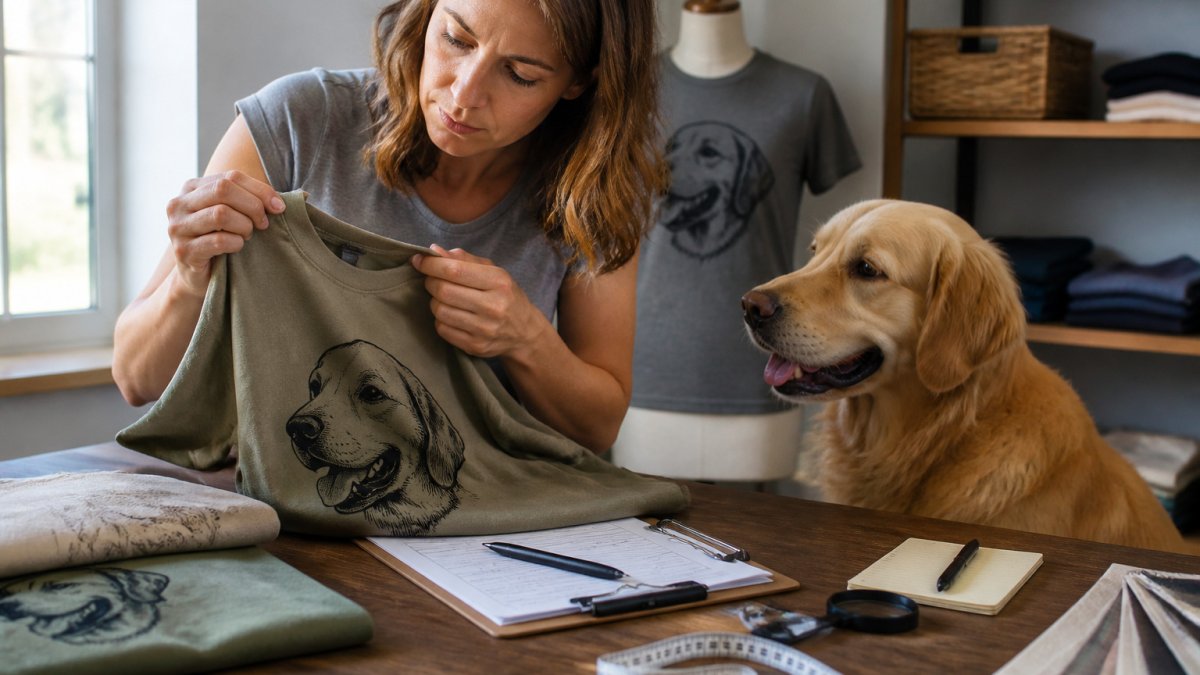
Start with the material description. You can work through a practical checklist for spotting quality dog clothing before you buy.
Finally, compare the price against what the listing actually includes. Judge the shirt on fabric, construction and print together rather than on the price tag alone.
If the material description is missing or vague, ask the seller directly what the fiber content and weight are before you buy.
Fit and Measurement: How a Dog-Themed Shirt Should Sit
A good fit depends on the cut of the body, the sleeve length and the way the fabric drapes through the chest and waist. For human shirts, check the size chart against your own measurements instead of guessing from your usual size. Chest width, body length and sleeve length are the three numbers that matter most.
Measuring Your Dog for a Better Fit
If you are buying a shirt for your dog, measure your dog rather than relying on breed averages. You need three numbers:
- Neck: Measure around the neck where a collar would sit, keeping the tape snug but not tight. Add about an inch for comfort and closure overlap.
- Chest: Measure the widest part of the chest, usually right behind the front legs. This is the most critical measurement, if the chest is too tight, the shirt will restrict movement and breathing.
- Back length: Measure from the base of the neck (where the collar sits) to the base of the tail. This determines whether the shirt covers the back without interfering with potty breaks.
Write those numbers down and compare them to the size chart on the product page. If your dog is between sizes or has a deep chest, go up a size, it is easier to take in a shirt than to let it out. For very small dogs, a too-large shirt can slip off or trip them; for large dogs, a too-small shirt can chafe under the arms.
Mobility and Safety Checks
A shirt that measures correctly can still be uncomfortable. After putting it on, watch your dog move:
- Walk and trot: The shirt should not bunch up at the shoulders or restrict the front legs. If your dog takes short, stiff steps or refuses to move, the fit is wrong.
- Sit and lie down: The back hem should not dig into the tail or get sat on. The neckline should not gap open or press on the throat.
- Head turn and sniff: Your dog should be able to turn its head fully and lower its nose to the ground without the collar pulling.
Remove the shirt if you see rubbing, redness, or hair loss under the arms or around the neck. Dogs with short coats or sensitive skin may need a softer fabric or a looser fit. If your dog has a known skin condition or allergy, ask your veterinarian whether a shirt is appropriate and what fabric to choose, general comfort advice is not a substitute for veterinary guidance.
Common Fit Mistakes to Avoid
- Guessing from weight or breed: Two dogs of the same breed can have very different chest depths. Always measure.
- Ignoring the sleeve opening: For dogs with broad shoulders or thick necks, check that the sleeve opening does not bind. Some shirts offer a raglan or drop-shoulder cut that gives more room.
- Skipping the trial walk: Always do a short supervised wear test indoors before a full walk or event. This catches rubbing and slipping early.
A well-fitted shirt stays in place, lets your dog move naturally, and keeps the print visible. If the shirt passes the mobility checks and your dog seems relaxed, you have found the right fit.
Construction Checks: Seams, Stitching, and Collar Quality
The collar deserves a close look too. A ribbed collar with a bit of stretch returns to shape after you pull it on and off. A collar that stays stretched out or wavy after a single wear will likely lose its shape quickly. Check that the neckline seam is not puckering, since that often signals poor stitching.
Print Quality and What Makes a Breed Design Last
Furry Vibes designs are based on over 30 years of dog show experience.
Pay attention to where the print sits on the shirt as well. A centered chest print tends to stay flat and visible, while a large back print may wrinkle if the shirt is folded tightly in a drawer.
How to Wash Printed T-Shirts So They Last Longer
The way you wash a printed shirt affects how long both the fabric and the graphic stay good. Turn the shirt inside out before washing to protect the print from friction against other garments and the drum. Wash in cold or lukewarm water on a gentle cycle, and use a mild detergent without bleach or harsh additives. Hang the shirt to dry or tumble dry on low.
Preventing Shrinkage and Fading
Shrinkage and fading come mostly from heat and harsh agitation. Pre-washed or garment-dyed cotton tends to shrink less, which is one reason to choose those options. Avoid leaving wet shirts in the machine for hours, since the damp fabric can stretch and the colors can dull from prolonged exposure. Washing with similar colors and turning shirts inside out will help the designs stay vivid for much longer.
Long-Term Wear Testing: What to Check After Repeated Washes
A shirt that looks good in the first week can fail by the tenth wash. Here is how to evaluate durability over time:
- Seams and hems: After five to ten washes, check side seams, shoulder seams and hems for loose threads, puckering or separation. Double-stitched hems should still lie flat. If seams are fraying, the construction is failing.
- Collar shape: A ribbed collar should return to shape after washing. If it stays wavy or stretched out, the ribbing or stitching is weak.
- Print integrity: Look for cracking, peeling or fading in the print. Screen-printed graphics with firm ink coverage typically last longer than thin digital prints. If the print cracks after a few washes, the ink or curing was insufficient.
- Fabric hand: Ring-spun cotton should feel soft and smooth after washing. If the fabric feels rough or pills heavily, the yarn quality or spinning method is likely lower grade.
- Colorfastness: Wash a new shirt separately for the first wash to check for dye bleed. If colors run, use a color catcher sheet in future washes and avoid hot water.
Care by Fabric Type
- 100% ring-spun cotton: Expect some shrinkage (often 3-5% in length) after the first wash. Pre-washed or garment-dyed versions shrink less. Wash cold and dry low to minimize further shrinkage.
- Cotton blends: Blends with polyester or rayon may shrink less but can pill more over time. Check the care label and avoid high heat.
- Garment-dyed shirts: These often feel broken-in from day one but may fade gradually, which is part of the intended look. Wash inside out and avoid bleach to preserve the dyed color.
When to Retire a Shirt
A shirt is no longer high quality if it chafes, restricts movement, or the print has cracked to the point of flaking off. If seams are separating or the collar will not hold shape, the shirt has reached the end of its useful life. For dogs, remove any shirt with loose threads or peeling print that could be chewed or swallowed.
Choosing Your Next Furry Vibes Breed Tee
When you are ready to pick your next shirt, start with the breed you live with or the one you work with in the ring or in rescue. Then narrow your choice by fabric and fit.
Browse the Furry Vibes collection to find a breed design that matches your dog and your style. Every shirt is made in the USA, with free shipping on all orders, so you can focus on picking the one that fits.
Frequently Asked Questions
What fabric is best for a comfortable dog shirt?
Furry Vibes tees are made from USA ring-spun cotton.
How can you tell if a T-shirt is good quality?
Start with the fabric. Look for a substantial feel rather than a thin, see-through weave. Check the collar: a ribbed collar that holds its shape after stretching is a good sign. Examine the seams, which should lie flat with tight, even stitching and no loose threads. Hold the shirt up to a light source to see whether the knit is consistent. Finally, look at the print. A print that feels like a thin layer sitting on top of the fabric is more likely to crack or fade than one that is well bonded to the garment. Reviewing product photos closely and reading customer feedback also helps you judge quality before ordering.
How should a dog-themed T-shirt fit?
A well-fitted dog-themed T-shirt should sit comfortably across the shoulders without pulling at the seams, with sleeves that end at a natural point on the upper arm. The body should skim the torso rather than cling or billow. Check the length against your own torso so the hem lands at the hip. Compare the brand's size chart with a shirt you already own that fits well, measuring chest width and body length laid flat. Fabric with a little stretch can make fit more forgiving, but shrinkage after washing can change fit over time, so consider how the shirt will be cared for.
How do you keep a printed T-shirt from fading?
Wash printed shirts inside out in cold water on a gentle cycle, and avoid bleach and fabric softeners that can break down ink and fibers. Skip the high-heat dryer, since heat is the main cause of cracking and fading in screen and digital prints. Hang the shirt or lay it flat to dry. Store shirts out of direct sunlight, which also fades colors over time. Following these habits will preserve the print and the garment's color for much longer than the shirt would otherwise last.
