

Table of Contents
- Why Starting the Right Conversation Matters for Dog Rescue
- Dog Rescue Conversation Starters That Actually Work
- Dog Adoption Conversation Scripts You Can Use
- Questions to Ask About Adopting a Rescue Dog
- How to Advocate for Rescue Dogs in Everyday Conversations
- Listening Skills That Make the Difference
- Handling Sensitive Topics and Difficult Conversations
- Frequently Asked Questions
Last Updated: October 21, 2026
Why Starting the Right Conversation Matters for Dog Rescue
Starting a conversation about rescue dogs isn't just small talk. It's how you connect people to animals that need homes. The right approach opens doors. The wrong one shuts them fast.
Many potential adopters feel nervous about asking questions. They worry they'll sound uninformed or judge a dog unfairly. Rescue volunteers often struggle to know what to share without overwhelming someone.
At Furry Vibes, we work with dog lovers who are passionate about rescue advocacy. A conversation starter that feels natural builds trust. It shows you care about the dog's future, not just the adoption process.
This guide walks you through how to start dog rescue conversations with confidence. You'll learn opening lines that work in different settings, scripts you can actually use, questions that matter, and ways to listen that make a real difference.
Dog Rescue Conversation Starters That Actually Work
The best conversation starters feel genuine. They don't sound rehearsed or pushy. They simply invite someone to learn more about a dog that deserves a second chance.
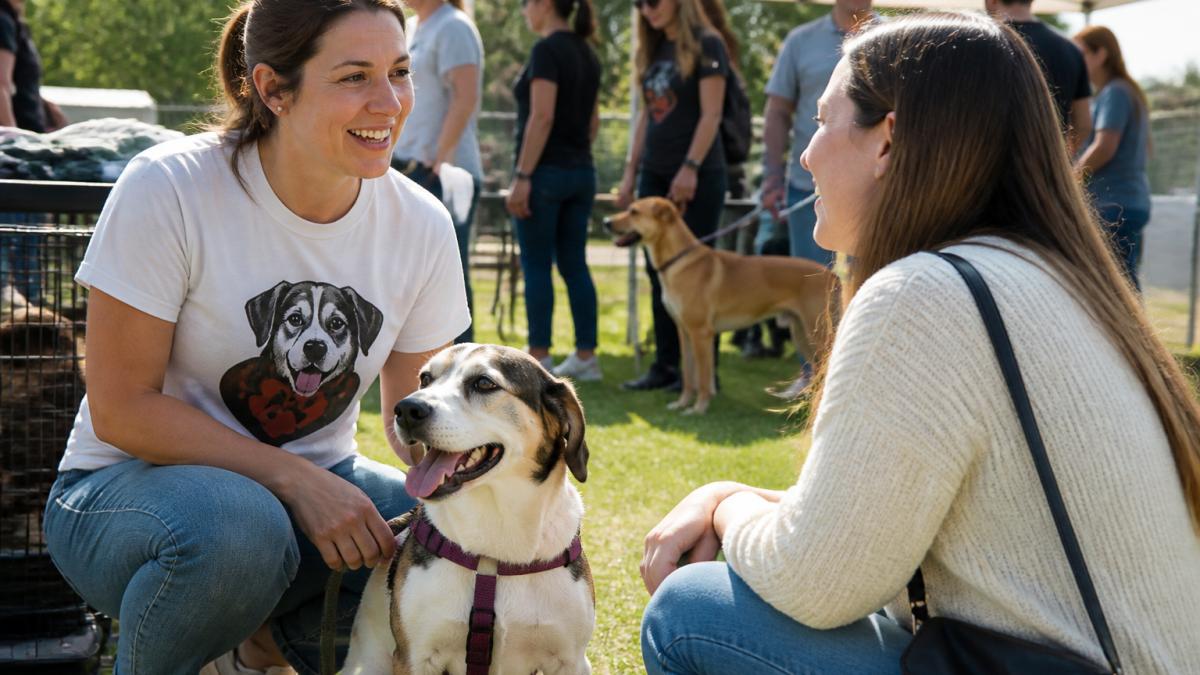
Volunteer talking to a potential adopter about a rescue dog at an outdoor adoption event
Most people want to talk about dogs. They just need permission. A simple observation or question gives them that permission. The key is matching your opener to where you are and who you're talking to.
Opening Lines for Different Settings
At an adoption event, you have time and space. People are already interested in rescue dogs. Try this: "Have you met any of our dogs yet?
This works because it's friendly, not salesy. You're offering help, not pushing. It opens a conversation instead of closing one down.
In casual settings, at work, at the dog park, online, people may not expect a rescue pitch. Start smaller. "I just got involved with dog rescue, and I'm learning so much.
For phone calls or online messages, be direct but warm. "I saw your inquiry about our Golden Retriever mix.
The goal is the same in every setting: make the other person feel like you're on their team, not selling them something.
Using Your Apparel as a Conversation Hook
What you wear sends a message before you say a word. Rescue-themed apparel, like the Rescue Dog Adopt Love Graphic Pop Art Shirt or Rescue Love Paw Print T-Shirt from Furry Vibes, becomes a conversation starter on its own.


Someone notices your shirt. They ask about it. Suddenly you're talking about rescue dogs without forcing the topic. The apparel does the work for you.
Wear it to the grocery store, the gym, community events. People drawn to animal welfare notice. They ask questions. You answer. A conversation about rescue dogs happens naturally.
The best part: your shirt shows you're serious. You're not just casually interested. You're wearing your values. That credibility matters when you talk to potential adopters. They see you're committed. They're more likely to listen and trust what you say.
Dog Adoption Conversation Scripts You Can Use
Scripts feel awkward until you use them a few times. Then they become natural. They're just a starting point. Adapt them to your voice and the situation.
Phone and Online Inquiry Scripts
When someone reaches out about a specific dog, respond quickly and warmly.
"Hi [Name], thanks so much for your interest in [Dog's Name]. I'm excited to tell you more about her. She's a [breed mix] who loves [specific trait], and she'd do great in a [type of home]. Before we go further, I'd like to learn more about your situation. Can you tell me about your living space and any previous pet experience?"
This script does several things at once:
- Thanks them for reaching out
- Shares one or two key facts about the dog
- Asks questions that matter for the match
- Keeps the conversation moving forward
For social media or email, keep it shorter. "Love your question about [Dog]. He's a great fit for active homes. Do you have a few minutes this week to chat by phone? I can tell you way more about his personality and what he needs."
In-Person Meet and Greet Scripts
You're meeting a potential adopter at the shelter or foster home. They're nervous. The dog might be nervous too. Your words set the tone.
"Welcome! I'm so glad you're here. Before we meet [Dog], let me tell you a bit about him. He came to us [brief reason], and he's made amazing progress. He loves [positive traits] and does best when [specific need]. Let me show you how he interacts with people, and then we can talk about whether he's a good fit for your home."
This script:
- Makes them feel welcome
- Gives context without oversharing
- Shows the dog's best side
- Leaves room for questions
- Focuses on fit, not just adoption
After they meet the dog, follow up with: "What are your first impressions? Any questions about his behavior or needs? I want to make sure you feel confident about this match."
Questions to Ask About Adopting a Rescue Dog
Good questions reveal whether a home is right for a dog. They're not interrogation. They're conversation. You're gathering information so you can make a good match.
Understanding the Dog's Background and Behavior
Before someone takes a dog home, they need to know what they're getting. Ask about the dog's history in your rescue.
Ask about temperament. "How does this dog do with other animals? With children? With strangers?" Share specific examples. "He's great with older kids but gets overwhelmed by toddlers." This prevents bad matches.
Ask about training. "What commands does he know? What behaviors still need work?" Be realistic. Many rescue dogs need patience and training. An adopter should know that upfront.
Ask about medical needs. "Does he have any health issues? Any medications? Any special care requirements?" A dog with arthritis needs a home with easy access to outside.
The point isn't to scare people away. It's to set them up for success. A good match means a dog stays in a home forever.
Assessing Home Environment and Long-Term Fit
You need to understand the adopter's life. Will the dog fit into it?
Ask about their living situation. "Do you rent or own? Any restrictions on dog size or breed?" Some apartments ban certain breeds. Some landlords don't allow dogs at all.
Rescue Dog Adopt Love Graphic Pop Art Shirt — Three Dogs with Bandanas Tee →
Ask about their schedule. "How much time do you have for exercise and training?" A high-energy dog needs an active home.
Ask about previous pet experience. "Have you had dogs before? What happened with those dogs?" This tells you a lot.
Ask about their expectations. "What are you looking for in a dog? What matters most to you?" Match their needs to the dog's personality.
Ask about their support system. "Do you have a vet?
How to Advocate for Rescue Dogs in Everyday Conversations
Advocacy happens in small moments. A comment at dinner. A conversation at the dog park. These moments add up. They change minds.
Sharing Your Rescue Dog's Story
Your own dog is your best ambassador. Share their story. Not the sad parts, the happy ones. "When I first got [Dog], he was scared of everything. Now he loves hiking and cuddles on the couch. He's taught me so much."
People connect with stories. They remember them. A statistic about rescue dogs might be forgotten by tomorrow. But a story about how a dog changed your life? That sticks.
Share photos and videos. Show your dog happy, playing, being loved. This is powerful. It shows what's possible. It shows rescue dogs aren't broken. They're just waiting for the right home.
When someone asks about your dog, don't just say "he's great." Tell them why. "He's incredibly loyal. He's helped me through some tough times. I can't imagine life without him." This is advocacy without being preachy.
Addressing Common Misconceptions
People believe things about rescue dogs that aren't true. You can gently challenge those beliefs.
Someone says, "Rescue dogs have problems." You can respond: "Some do, but many are in rescue because their owners' lives changed, not because the dog did anything wrong.
Someone says, "Shelter dogs are damaged." You can say: "Dogs are resilient. With patience and love, most dogs recover from hard starts. My dog was terrified when I got him. Now he's confident and happy."
Someone says, "I want a puppy because it's easier." You can offer perspective: "Puppies are actually harder. They need constant training and supervision. Adult rescue dogs often come with basic training and a calm temperament."
Don't argue or judge. Just offer a different perspective. Plant a seed. Let them think about it.
Listening Skills That Make the Difference
The best conversations aren't about talking. They're about listening. When someone feels heard, they open up. They ask more questions. They're more likely to make a good decision.
Listen without planning your response. Many people listen while thinking about what they'll say next. Instead, focus on what the other person is actually saying. Notice their tone.
Ask follow-up questions. If someone says, "I have a busy schedule," don't assume that's a no. Ask: "What does a typical day look like for you?
Validate their concerns. If someone worries about a dog's behavior, don't dismiss it. Say: "That's a fair concern.
Don't pressure anyone. If someone isn't ready, that's okay. Better they don't adopt than adopt and return the dog later. A good conversation plants seeds. Some grow into adoptions. Some don't.
Handling Sensitive Topics and Difficult Conversations
Some conversations are harder than others. Someone asks about a dog's abuse history.
Be honest about difficult pasts. "This dog was abused before coming to us.
Address past returns without judgment. "I see you've had dogs before.
Handle family disagreements with empathy. "It sounds like your partner has concerns about the time commitment. Those are valid concerns.
In difficult moments, stay calm. Your tone sets the tone for the whole conversation. If you get defensive, they get defensive.
The goal isn't to convince everyone. It's to have honest conversations that lead to good matches.
Starting dog rescue conversations takes practice, but it gets easier. The scripts and questions in this guide give you a framework.
Every conversation you have could lead to a dog finding their forever home. When you wear apparel that shows your commitment, like Furry Vibes' Rescue Dog Adopt Love Graphic Pop Art Shirt made from premium Comfort Colors 1717 cotton, you signal that you're serious about rescue advocacy.
Start your next dog rescue conversation with confidence. Listen more than you talk. Focus on finding the right match.
Frequently Asked Questions
What should I say when someone asks where I adopted my dog?
Share your dog's rescue story authentically: mention the rescue organization or shelter, describe how you found your dog, and highlight one or two personality traits that make your dog special. For example: 'I adopted her from a local shelter two years ago. She was listed as a shy Golden mix, but once she settled in, her goofy personality came right out.' This opens the door for follow-up questions and shows potential adopters that rescue dogs have real personalities and potential.
How can I talk about adopting a rescue dog without pressuring someone?
Ask genuine questions about their lifestyle and pet experience rather than pushing adoption. Listen more than you speak. If they express interest, share information about local rescue organizations and adoption processes, but let them decide next steps. Say things like 'Have you thought about what kind of dog might fit your life?' instead of 'You should adopt.' Respect their timeline and acknowledge that adoption is a big decision requiring careful thought and preparation.
What are good conversation topics about dogs with someone considering adoption?
Ask about their previous pet experience, their daily schedule, their home environment, and what personality traits they value in a dog. Discuss how rescue dogs' backgrounds shape their needs and temperament. Talk about the adoption process itself, post-adoption support from rescue organizations, and the transition period. These topics help potential adopters think through whether rescue adoption fits their life, and they show you care about successful matches rather than just placing dogs.
How can I start a conversation about supporting a local dog rescue?
Wearing rescue advocacy apparel like the Rescue Dog Adopt Love Graphic Pop Art Shirt or Rescue Love Paw Print T-Shirt naturally invites questions and opens doors. When people ask about your shirt, explain the rescue organization you support, share what they do, and mention specific ways to help: fostering, volunteering, donating, or adopting. Make it easy by having information ready about their website or upcoming adoption events. People respond better when you show genuine passion and make involvement accessible.